By Rochelle Anderson, Mighty Pet | Marinette WI, Menominee MI, Peshtigo WI
What kind of dog training does my dog need is the question we get asked before anyone’s even filled out a form. Usually it comes with a story attached… a puppy that won’t stop mouthing, a one-year-old that turns into a different dog on leash, a rescue that flinches at the vacuum. People assume there’s one class that fixes all of it. There isn’t.
Quick Answer: What kind of dog training does my dog need depends on age, history, and the specific behavior you’re trying to change. Young puppies usually need Foundation Manners, a standing group class covering impulse control and basic cues. Adolescent dogs with leash reactivity or fear-based behavior often do better starting in private sessions with Meghan M. Smith, CPDT-KA, before joining a group setting. There isn’t one right answer for every dog, which is why we ask before we recommend.
Start With What’s Actually Happening, Not the Age on the Chart
Every training conversation at Mighty Pet starts the same way. Meghan asks what’s actually happening, not just how old your dog is. A 6-month-old puppy that’s calm around new people needs something different than a 6-month-old puppy that’s already started guarding food. Age tells you a range. It doesn’t tell you the plan.
That’s the mistake we see most… someone signs up for the class their neighbor’s dog did, and it’s the wrong fit from week one. The dog isn’t learning slower. The class isn’t built for the problem in front of them.
Meghan holds her CPDT-KA certification through the Certification Council for Professional Dog Trainers, and follows the same ongoing continuing-education standard the Association of Professional Dog Trainers requires of its own members. That’s the difference between a recommendation based on training science and a guess.
Puppy Manners: What a New Puppy Actually Needs First
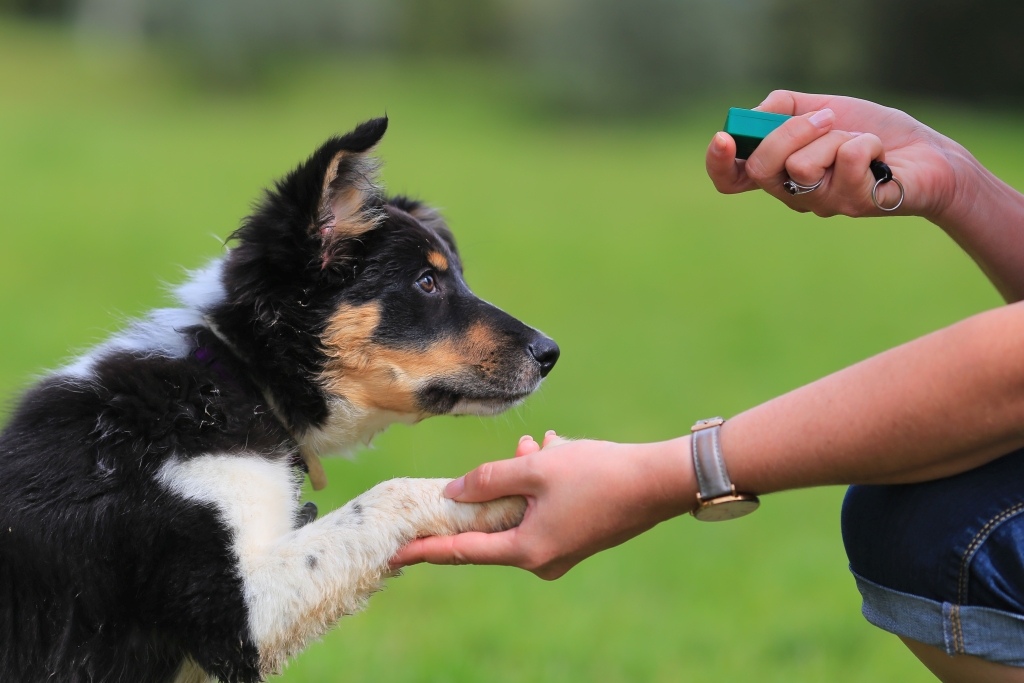
If your dog is under a year old and this is your first time working with a trainer, Foundation Manners is almost always the starting point. It’s our standing, open-enrollment group class, Mondays at 5 PM or Wednesdays at 10 AM, all year. New students start with a private orientation and 5 weekly classes for $165. Continuing students pay $150 for 6 weekly classes.
The class covers a reinforcement marker, impulse control, sit, down, and recall. That sounds basic on paper. In practice, it’s the difference between a dog that comes when you call versus one that treats “come here” as a suggestion, and it’s the foundation for everything that comes later.
Adolescent Chaos: Why the Same Dog Suddenly Seems Impossible
Somewhere between 7 months and a year and a half, a lot of dogs stop being easy. It’s not a training failure. It’s a real developmental stage, and it’s the number one reason people show up frustrated, convinced their dog “forgot everything.” The dog didn’t forget. The dog got braver, more independent, and a lot more interested in everything except you.
For adolescent dogs still working on basics, Foundation Manners can still be the right call. For dogs with a specific issue that’s flared up… leash pulling that’s turned into lunging, jumping that’s turned into knocking people down, ignoring recall entirely… private sessions are usually a faster, less frustrating starting point before a group class makes sense.
Fear, Reactivity, and Dogs That Need a Quieter Starting Point
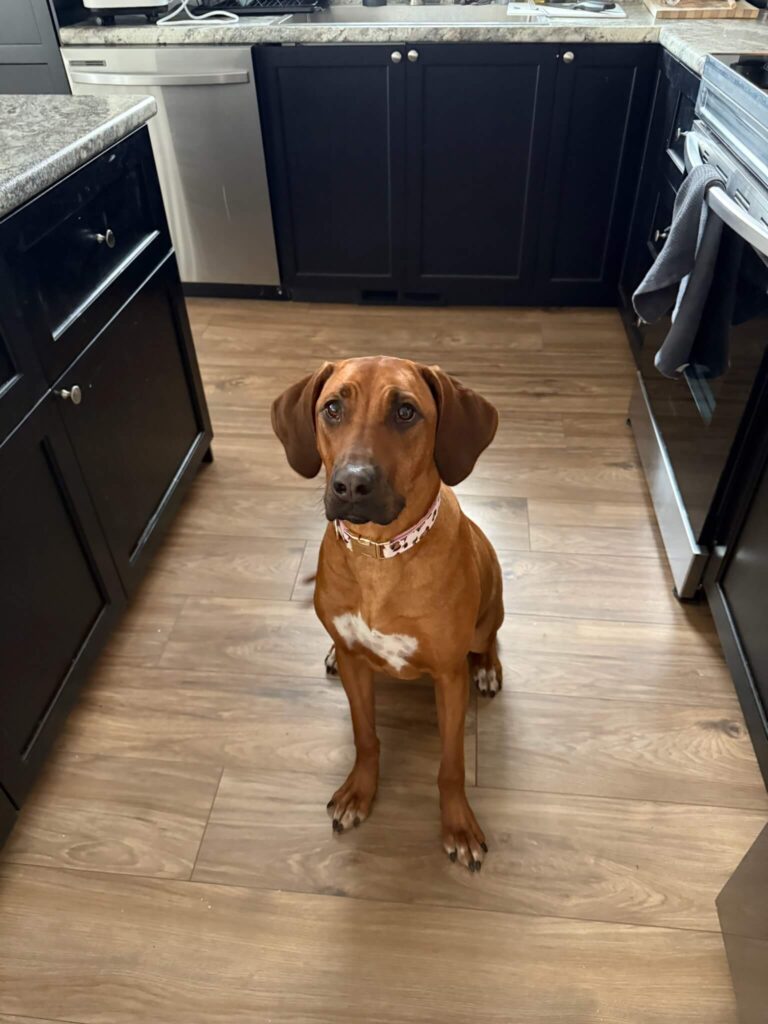
Some dogs, adopted or otherwise, come in already carrying something. A flinch at loud noises. A hard stare at other dogs. A dog that does great at home and falls apart the second another dog walks by. These dogs usually don’t do well starting cold in a group setting, and putting them in one too early can set training back instead of forward.
Meghan works with these dogs one-on-one first, building confidence and specific skills before ever asking the dog to handle a room full of other dogs and people. If this sounds like your dog, say so up front. It changes the recommendation.
What About a Rescue Dog With an Unknown History?
This one comes up constantly in this area, since so many families here adopt rather than go through a breeder. If you don’t know your dog’s history, that’s not a problem you need to solve before calling us. It’s information Meghan factors in, not a requirement you’re missing.
A rescue with no known history usually starts more cautiously than a puppy from a known litter… more observation, more private time before a group setting, more attention to body language early on. That’s not a longer path because something’s wrong. It’s the right path for a dog nobody’s been watching from day one.
What Kind of Dog Training Does My Dog Need if Manners Are Fine but One Specific Thing Isn’t?
Not every dog needs a full reset. Some just need help with one thing… a dog that’s great except at the vet, a dog that won’t settle when guests come over, a dog that’s ready for something more advanced like trail manners or scent work. That’s where our seasonal workshops and skills classes come in, usually run in shorter blocks through the year, focused on one specific skill instead of a full curriculum.
Still Not Sure? That’s the Actual Answer Half the Time
If you read all of that and still aren’t sure which category your dog falls into, that’s normal, and it’s exactly why we don’t push people into a class over the phone. Tell Meghan what’s actually happening… the good parts and the frustrating parts… and she’ll tell you honestly where to start. Sometimes that’s group. Sometimes it’s private first. We wrote out the full comparison of the two if you want to read ahead: Group Dog Training vs Private Sessions Near Marinette WI: Which Fits Your Dog? (coming October 15)
Frequently Asked Questions About What Kind of Dog Training My Dog Needs
How do I know what kind of dog training my dog needs?
Start with what’s actually happening, not just your dog’s age. Puppies usually start in Foundation Manners group classes. Dogs with a specific behavior problem, fear, or reactivity often start better in private sessions. Meghan will ask about your dog’s history before recommending a starting point.
Is Meghan actually qualified to make that call?
Yes. Meghan M. Smith is a Certified Professional Dog Trainer, Knowledge Assessed (CPDT-KA), through the Certification Council for Professional Dog Trainers, earned in September 2018. The certification requires documented training experience and a proctored exam, not just a weekend course.
My dog is reactive on leash. Should I start with group classes?
Usually no. Dogs with active leash reactivity typically do better starting one-on-one with Meghan, building specific skills before joining a group setting. Group too early can make reactivity worse instead of better.
More Questions About What Kind of Dog Training My Dog Needs
What age should my puppy start training?
Foundation Manners is open enrollment, so puppies can start as soon as they’re comfortable and current on the vaccinations we require. Earlier is generally better for building good habits before problem behaviors set in.
What if my dog only has one specific problem, not a full list?
That’s common, and it’s what our seasonal workshops and skills classes are built for… focused, shorter sessions on one skill instead of a full curriculum. Ask what’s currently running.
Can I switch from group classes to private sessions if it’s not working?
Yes. Talk to Meghan directly. She’d rather adjust the plan than have you sit through a class that isn’t the right fit.
Will Mighty Pet train a dog that’s shown aggression?
Talk to Meghan directly before enrolling. Dogs showing aggression toward our staff are outside what we can safely take on, but reactive or fearful dogs are often exactly who private sessions are built for.
Not sure where to start? Ask Meghan. See every group class, private session, and workshop we offer on our dog training in Marinette WI page, then tell Meghan what’s going on with your dog and she’ll point you to the right starting place.
Heading out of town while your dog is between classes? Here’s what a pet sitter costs in Marinette WI, and why we think a local pet sitter beats Rover.
About the Author
Rochelle Anderson has run Mighty Pet in Marinette, Menominee, and Peshtigo since 2009. She works directly with Meghan M. Smith, CPDT-KA, to make sure every family gets matched to the right training format instead of whatever class happens to be open.