How Much Does Quality Natural Dog Food Cost? What to Expect
By Rochelle Anderson, Mighty Pet | Marinette WI, Menominee MI
Grocery-store dog food is cheap for a reason. Understanding natural dog food cost starts with knowing why quality food costs more, and if nobody has explained it, the sticker shock at the register makes sense.
This isn’t about scaring you into the most expensive bag on the shelf. It’s about knowing what you’re actually paying for, so a fair price doesn’t feel like a rip-off and a suspiciously cheap one doesn’t feel like a bargain.
Here’s what natural dog food cost actually looks like… what drives it, what to expect, and the questions worth asking before you buy anything.
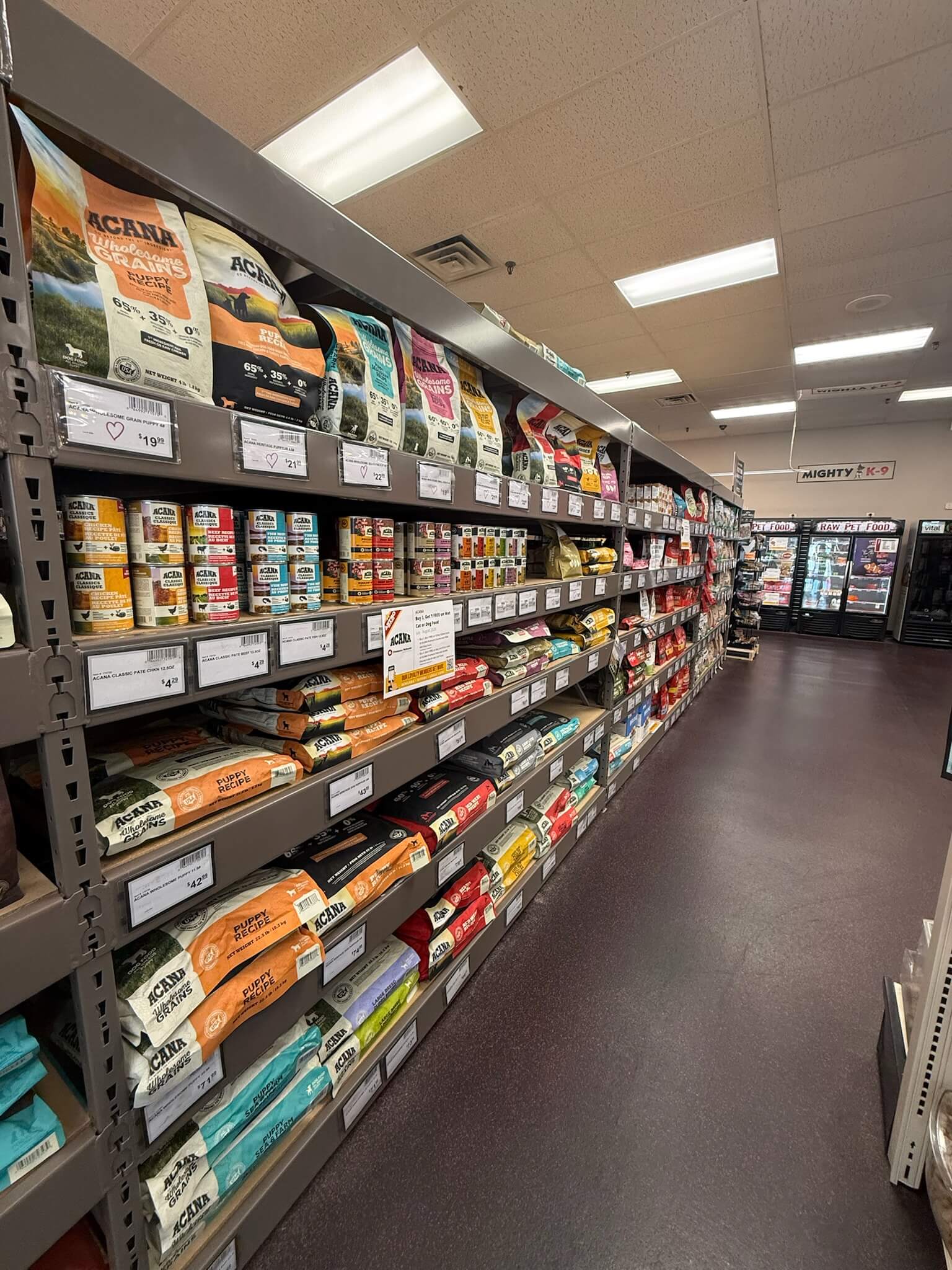
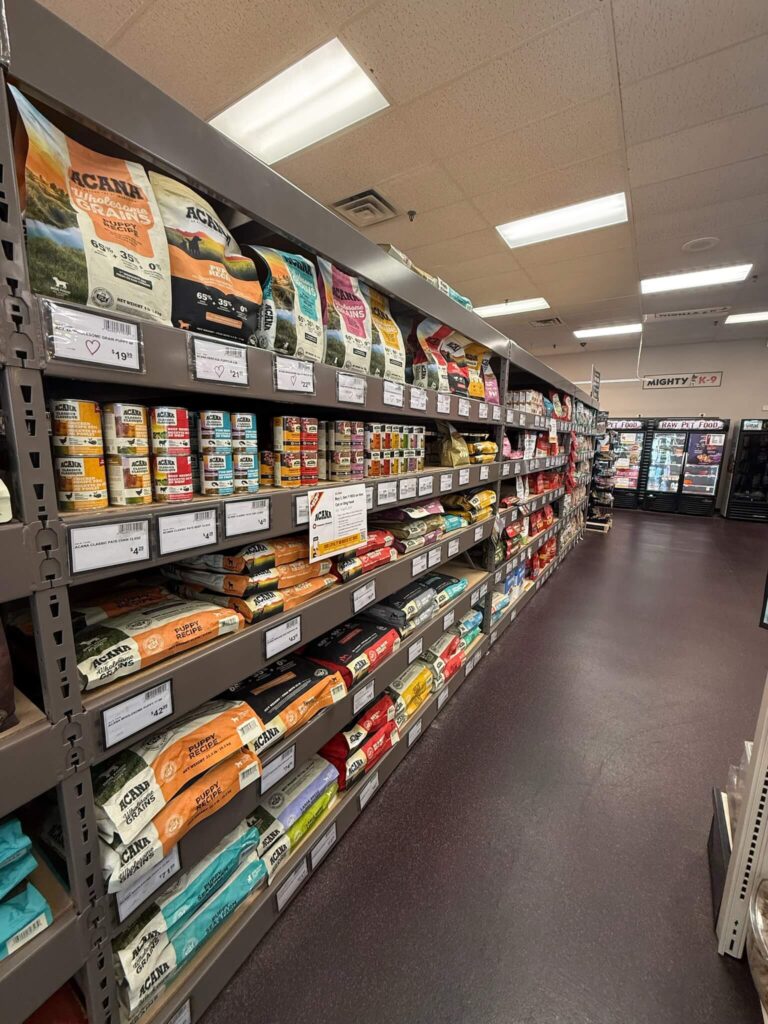
Quick Answer: Quality natural dog food costs more than grocery-store brands because of ingredient sourcing and the AAFCO natural standard. At Mighty Pet in Marinette, large bags run roughly $43 to $49 at entry level, $53 to $64 mid-tier, and $79 and up for premium, with freeze-dried and fresh higher. Price varies by protein source, ingredient quality, and where it’s made.
What Natural Dog Food Cost Actually Buys You
This is the part most pricing guides skip.
A price tag is just a number. What you’re actually paying for is everything that number has to cover. When a food cuts corners to hit a lower price, the ingredient list usually shows it first.
Natural dog food costs more because of what goes into it:
Real Named Protein Sources
Chicken, beef, or salmon listed by name, not a vague “meat meal” that could be almost anything.
No Artificial Dyes, Colors, or Preservatives
Formulating a food without synthetic additives usually costs more than relying on them for shelf life and appearance.
Sourcing and Manufacturing Standards
Foods that avoid China-sourced treats and stick to domestic manufacturing typically carry higher production costs than food made wherever ingredients are cheapest.
Following the AAFCO Natural Standard
According to the Association of American Feed Control Officials, ingredient definitions and standards exist so pet owners can actually compare products on equal terms, not on marketing language alone.
None of that is built into a $15 bag of grocery-store dog food. That’s not a knock on anyone’s budget. It’s just what a lower price usually means.
What Changes Natural Dog Food Cost
Price isn’t fixed. These are the factors that move it, across any retailer carrying natural food.
Protein Source
Named, single-source proteins like salmon or duck typically cost more than food built around a generic “meat meal.”
Format
Dry kibble is usually the most affordable natural option. Freeze-dried and fresh or gently-cooked foods cost more because of how they’re processed and shipped.
Bag or Container Size
Larger bags typically lower the per-pound cost, but only make sense if you can store the food properly and use it before it goes stale.
Manufacturing Standards
Facilities that avoid artificial preservatives and China-sourced ingredients generally carry higher production costs than lowest-bidder manufacturing.
Special Formulations
Grain-free, limited-ingredient, or prescription-adjacent formulas for specific health needs typically run higher than a standard adult maintenance formula.
Where You Buy It
Independent retailers who guarantee their food and help you troubleshoot a switch are part of what you’re paying for, on top of the bag itself.
The Pet Food Institute, the national trade association representing US pet food makers, publishes similar guidance on how sourcing and manufacturing standards drive production costs across the industry… none of this is unique to any one brand or store.
What Should a Natural Dog Food Label Be Able to Tell You?
A quality natural dog food should answer these questions without you having to dig for them.
Named Protein Sources
Not “meat meal.” Chicken, beef, salmon, named specifically, ideally first on the ingredient list.
No Artificial Dyes, Colors, or Preservatives
This should be stated plainly, not buried in fine print.
Country of Origin for Treats and Key Ingredients
A brand that avoids China-sourced treats should be able to say so directly.
Compliance with the AAFCO Natural Standard
If a label uses the word “natural,” it should be able to back that up against the actual definition, not just the marketing.
Guidance on Switching, Not Just a Bag
A retailer who knows food should help you transition your dog gradually, not just ring up the sale.
Questions to Ask Before You Buy Natural Dog Food
Use these at any pet store, not just ours. A knowledgeable retailer will welcome them.
1. Can you name the primary protein source and where it comes from? A real answer comes fast. Hesitation is a red flag.
2. Does this food meet the AAFCO natural standard, or is “natural” just on the label? There’s a real difference between the two.
3. Is this organic, or natural? They’re not the same thing, and a knowledgeable staff member should be able to explain why.
4. Where are the treats made? Country of origin matters, and a good retailer should know it product by product.
5. What’s the return policy if this doesn’t work for my dog? Food is a trial-and-error process for a lot of pets. A guarantee matters.
6. How do I transition my dog to this food without upsetting their stomach? A gradual switch, usually over several days, is easier on most dogs than an overnight change.
Red Flags: What a Suspiciously Low Price Usually Means
You deserve a straight answer here.
A dog food priced far below the natural-food range isn’t cutting corners on marketing. It’s cutting corners somewhere in the bag.
Here’s what an unusually low price on “natural” food usually signals:
Vague ingredient names. “Meat byproduct” without a named species, or “animal fat” without a source, is a sign the manufacturer isn’t paying for named, traceable ingredients.
No clear country-of-origin information. If a bag can’t tell you where the treats or ingredients actually came from, that’s worth asking about directly.
Artificial dyes and preservatives doing the work. Bright colors and a long shelf life without refrigeration are usually a sign of synthetic additives, not natural ones.
“Natural” on the label without meeting the AAFCO standard behind it. The word itself isn’t regulated the way “organic” is, so a low price and a loose use of the word often go together.
Cheap isn’t always bad. But cheap and labeled “natural” deserves a second look at the ingredient panel before it goes in your cart.
Common Myths About Natural Dog Food Pricing
A few myths come up constantly when people start comparing natural dog food prices. Worth clearing up before you shop.
“Expensive always means better.” Not automatically. Price should track with named ingredients and sourcing standards, not packaging or brand recognition alone. A mid-priced natural food with a clean ingredient list can outperform an overpriced one riding on marketing.
“Cheap food and natural food are basically the same thing now.” They’re not. A low price on a bag labeled “natural” is worth a second look at the ingredient panel, since the word itself isn’t a regulated guarantee the way “organic” is under USDA certification.
“You have to buy the biggest bag to save money.” Only if you can store it properly and use it before it goes stale. A large bag of food that sits open too long loses freshness, and freshness matters more with natural food, since it skips the synthetic preservatives that extend shelf life artificially.
“Switching foods for a lower price is always fine.” Cost matters, but a sudden switch, especially to a food with a different protein source or fiber content, can upset a dog’s stomach. A gradual transition, and a retailer who’ll walk you through it, is worth factoring into the real cost of switching.
Where Mighty Pet's Rates Fit in the Picture
You’ve seen the factors. Here’s where Mighty Pet fits into them.
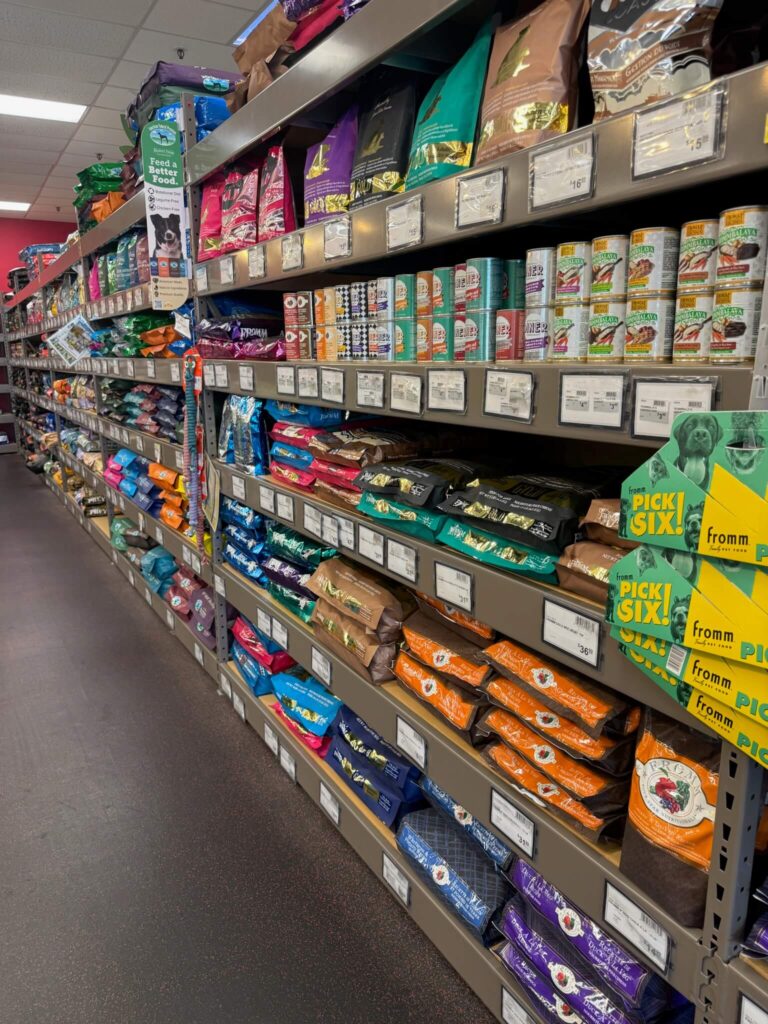
We stock natural pet food that follows the AAFCO standard… no artificial dyes, no artificial colors, no artificial preservatives, no China-sourced treats, mostly US-made. Every food is guaranteed, so if something doesn’t work for your pet, bring it back, even partially used, and we’ll help you find something that does.
We carry three general pricing tiers so you have a ballpark before you walk in. Bigger bags bring the per-pound cost down, so our entry-level 40 pound bag can come in under the industry number above for a smaller 25 to 30 pound bag. Entry-level runs roughly $12 to $15 for a small bag up to about $43 to $49 for a 40 pound bag, mid-tier runs about $17 to $19.99 on the small end up to $53 to $64 for a large bag, and premium starts around $19.99 for a small bag and runs $79 and up for a large bag. Exact shelf prices still vary by brand, formula, and bag size across the hundreds of products we carry, so come in and we’ll walk you through real numbers for your pet’s specific needs.
Curious how our shelves stack up against the big-box store down the road? We’re working on a full comparison breakdown, coming soon.
If you’re also lining up in-home pet sitting or dog walking while you’re away, our nanny team can follow the same feeding notes you’d leave for a boarding facility. Curious what that costs? We wrote the full breakdown there too.
Frequently Asked Questions About Natural Dog Food Cost
How much does natural dog food cost?
Quality natural dog food commonly runs $50 to $90 industry-wide for a 25 to 30 pound bag of dry kibble, with freeze-dried and fresh options running higher. At Mighty Pet, that breaks out into three general tiers. Entry-level runs roughly $12 to $15 for a small bag up to about $43 to $49 for a 40 pound bag, mid-tier runs about $17 to $19.99 on the small end up to $53 to $64 for a large bag, and premium starts around $19.99 for a small bag and runs $79 and up for a large bag. Exact pricing depends on brand, formula, and bag size, so ask a staff member for your pet’s specific needs.
Why is natural dog food more expensive than grocery-store brands?
Natural dog food avoids artificial dyes, colors, and preservatives, uses named protein sources, and typically follows stricter manufacturing and sourcing standards. All of that costs more to produce than a food built around the cheapest available ingredients.
Does organic dog food cost more than natural dog food?
Not necessarily. Organic (USDA certification) and natural (the AAFCO standard) are two separately-earned labels, and neither one is automatically more expensive than the other. Price tracks more closely with protein source, ingredient quality, and manufacturing standards than with which of the two labels a bag carries.
What's the cheapest way to feed my dog quality natural food?
Buying the largest bag size you can properly store and use before it goes stale usually lowers the per-pound cost. Asking a knowledgeable retailer about mid-tier natural options, rather than the premium end of the shelf, can also help.
Does a higher price always mean better quality dog food?
Not automatically. Price should track with named ingredients, sourcing transparency, and manufacturing standards. A knowledgeable retailer can help you compare what you’re actually paying for, not just the number on the bag.
Why do two bags of natural dog food with similar labels cost different amounts?
It usually comes down to protein source, format (dry kibble versus freeze-dried or fresh), bag size, and whether the formula is a special one like grain-free or limited-ingredient. Two bags can both say “natural” and still land in very different price ranges for those reasons.
Can I buy prescription pet food at Mighty Pet without a vet's script?
No. Prescription diets are stocked in store but require a current script from your veterinarian on file before we sell them. That’s not us being difficult… it’s how those formulas are regulated.
Ready to see real options for your pet’s needs and budget? Come talk to someone who actually knows the shelves.
Shop at mightypet.net or stop into the store. We serve Marinette, Menominee, Peshtigo, and the surrounding area.
About the Author
Rochelle Anderson has run Mighty Pet in Marinette, Menominee, and Peshtigo since 2009. She oversees the store’s food-selection process and staff nutrition training, and has spent 17 years helping local pet parents choose food that actually works for their pets.