By Rochelle Anderson, Mighty Pet | Marinette WI, Menominee MI, Peshtigo WI
What is dog enrichment? We use the word all day at camp, and it shows up on a lot of pet products and daycare websites now. The word got big, and the meaning got fuzzy. So here it is in plain English, and what it looks like on an actual camp day in Menominee.
Quick Answer: What is dog enrichment? It is giving your dog safe, supervised chances to do what dogs naturally do… sniff, search, chew, chase, and solve small puzzles. Good enrichment works a dog’s brain, nose, and body. At Mighty Pet’s day camp, counselors pick at least two enrichment activities for every camp session.
What Is Dog Enrichment, Exactly?
Enrichment means giving your dog ways to act on his natural instincts. The ASPCA lists playing, chasing, smelling, chewing, and scavenging as the behaviors dogs are built for, and says that letting dogs do them leaves a dog physically, emotionally, and mentally satisfied.
The same page has a warning worth reading twice. Dogs who don’t get stimulation tend to find ways to enrich themselves, and those ways usually become the behaviors we call unwanted. A bored dog finds a job. You rarely like the job he picks.
Enrichment can be a puzzle toy, a slow sniff walk, a game of find-it, or a day at camp. The activity matters less than whether it lets your dog use his brain, his nose, or his body.
Brains, Noses, and Bodies: The Three Jobs of Enrichment
Meghan Smith, our lodge and day camp manager, describes camp enrichment as rotating games and activities that get dogs using their brains, noses, and bodies. We think that is the cleanest way to sort it, so we’ll use it here.
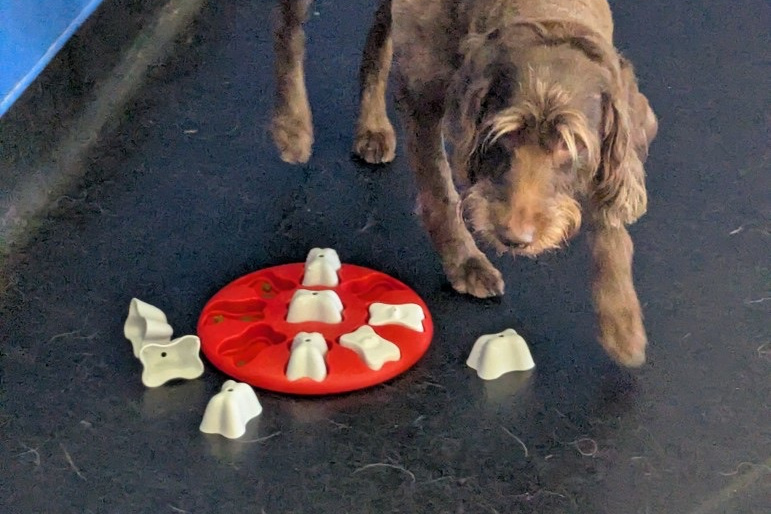
Brains. A treat puzzle makes a dog stop and work something out before he gets the reward. In our photo, a brown dog is working a red puzzle with white lift-out pieces.
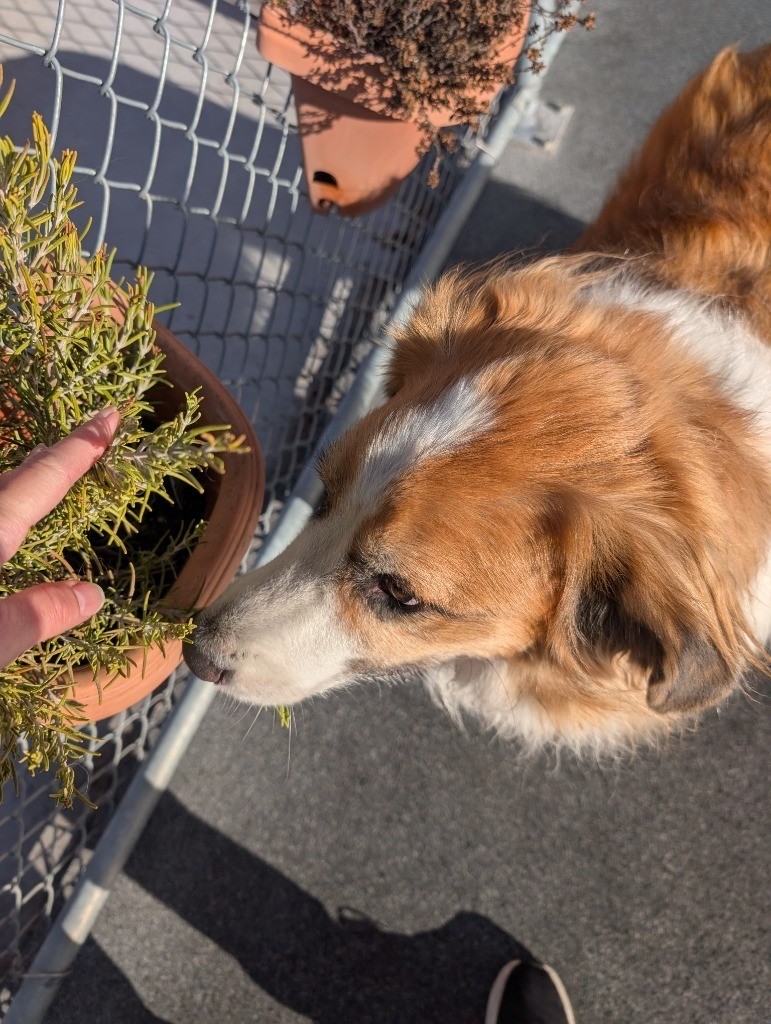
Noses. Sniffing is how a dog reads the world. The ASPCA calls it both stimulating and calming. A potted herb at nose height, or a treat hidden for him to find, gives a dog something new to investigate.
Bodies. Wading, climbing a ramp, trotting through a yard, and chasing a friend all count. A shallow pool and a few ramps give a dog room to move in ways a living room never will.
What Does Dog Enrichment Look Like at Mighty Pet Camp?
Our Doggie Day Camp runs two tracks. Social Camp puts dogs in thoughtfully matched playgroups based on personality and play style. VIP Camp is more individualized, for dogs who prefer something different, with solo play or small groups of 2 to 3. Every new dog starts with a $25 screening day so we can see how they do at camp and pick the track that fits.
Inside either track, our counselors pick at least two enrichment activities for every camp session. They rotate through a mix of games and activities that use brains, noses, and bodies. A day at camp has more in it than dogs running laps.
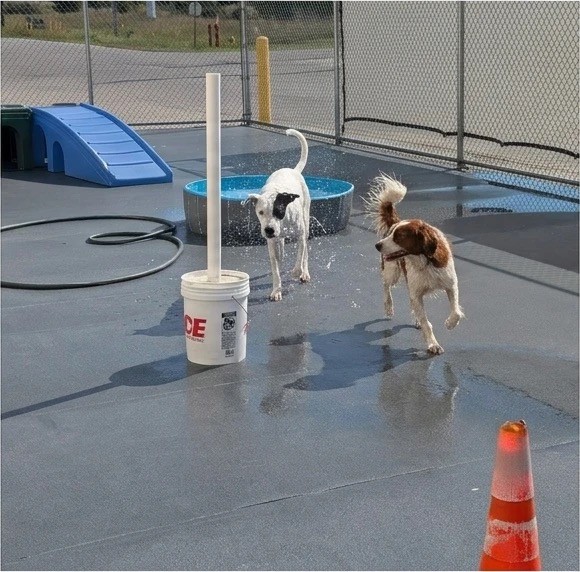
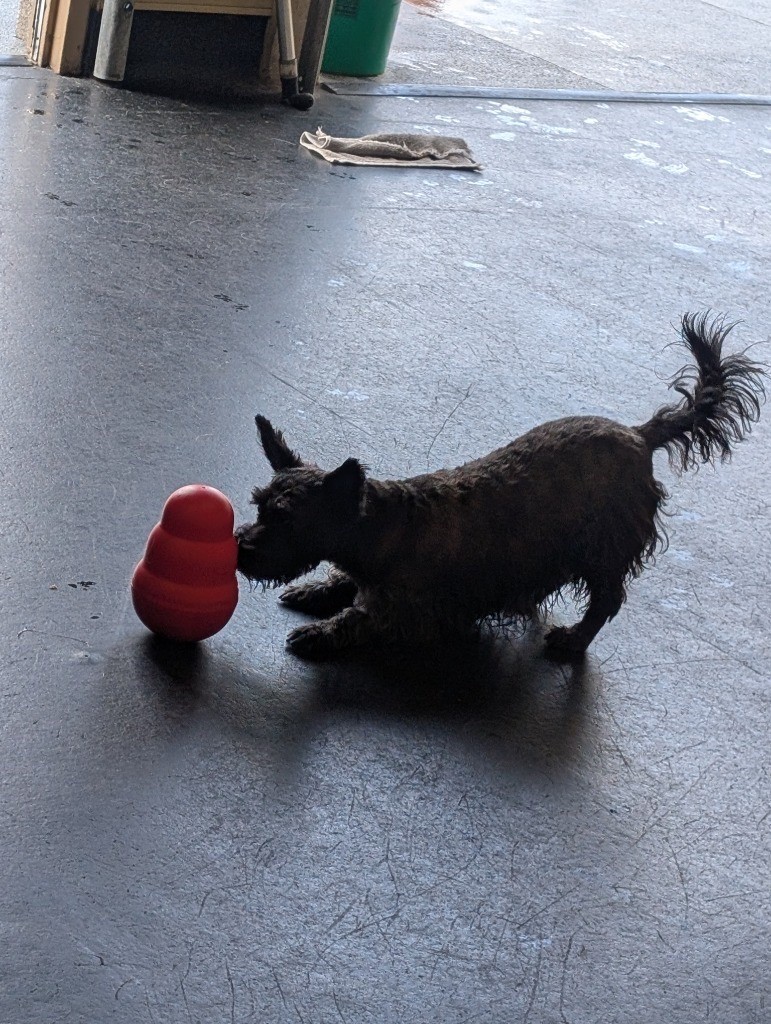
You can see a few of those moments in the photos on this page… a treat puzzle, a dog checking out a potted herb, a small dark dog nosing a red toy across the floor, and two dogs shaking off water beside a small pool.
Our counselors also stay hands-on. They are actively involved in each session, getting to know the dogs and encouraging good social play. They are trained to read the room and pull a dog out of play before he gets overwhelmed. Rest and play take turns all day, and every dog stays supervised.
Is Daycare Good for Socialization?
We get asked this one a lot, and the word means very different things to different people. We wrote about it back in 2021, and we still agree with it: the goal is helping a dog learn to communicate and relate with people and other animals, at his own pace, with good experiences along the way. Quality beats quantity.
It can be, for the right dog in the right group. A dog who loves other dogs gets real practice reading body language and playing politely, especially when playmates are matched and breaks are built in. A dog who finds a big group stressful usually gets worse when he is pushed into one. Dogs have preferences, same as people. Some dogs want one or two close friends and some love a crowd.
That is why camp starts with a screening day, and why VIP Camp exists. A dog who does better solo or in a group of 2 to 3 simply needs a different setup. If you want the side-by-side on how we run camp compared with an open-play daycare, we wrote that up too: Enrichment-Based Dog Daycare vs Regular Daycare: Which Is Better for Your Dog?
Can I Add Dog Enrichment at Home?
Yes, and most of it costs next to nothing. The ASPCA’s DIY page shows puzzles you can build from a muffin tin and tennis balls, a stack of nested boxes with a treat in the smallest one, or a folded paper roll with a treat inside. It also describes a simple game called find it. You say the words, toss a treat close by, then slowly make the hunt harder until you are hiding treats for him to track down.
- Slow your walk down and let him stop and sniff. The ASPCA suggests walking at your dog’s pace.
- Hide a handful of kibble in a snuffle mat and let him forage for it.
- Make a meal a puzzle. The ASPCA says every meal is a chance for enrichment.
Supervise any puzzle or chew, and take it away if your dog starts trying to swallow pieces. The AKC adds that a snuffle mat is a poor fit for a dog who chews everything, and to keep track of the treats you hand out so enrichment time doesn’t turn into overfeeding.
What If Boredom Is Not the Whole Story?
A few puzzle toys help a lot of dogs. If your dog’s behavior is bigger than boredom, a training plan may be the better next step. We wrote a guide on how to tell what kind of training your dog needs, and Meghan, our CPDT-KA trainer, is happy to talk it through. You can also see everything we offer for pets across Marinette, Menominee, and Peshtigo on our Pet Care in Marinette WI page.
Frequently Asked Questions About Dog Enrichment
What is dog enrichment?
Dog enrichment is giving a dog safe, supervised chances to act on natural instincts like sniffing, searching, chewing, chasing, and solving problems. The best enrichment works a dog’s brain, nose, and body, and it can be as simple as a treat puzzle or a slow sniff walk.
Is dog enrichment the same as exercise?
No. Exercise tires a dog’s body, while enrichment also works his brain and his nose. The ASPCA notes that dogs without enough stimulation find their own ways to entertain themselves, which often shows up as unwanted behavior.
Is dog daycare good for socialization?
It can be, for the right dog in the right group. The goal is helping a dog learn to relate to people and other dogs at his own pace, and quality matters more than the number of dogs. New dogs at Mighty Pet start with a $25 screening so we can match each one to Social Camp or VIP Camp.
What enrichment activities does Mighty Pet’s day camp include?
Our counselors pick at least two enrichment activities for every camp session and rotate through games that use brains, noses, and bodies. Counselors stay hands-on in each session, getting to know the dogs and encouraging good social play.
More Questions About Dog Enrichment
Can I do dog enrichment at home without spending much?
Yes. The ASPCA shares puzzles you can build from a muffin tin, nested boxes, or paper rolls, plus a hide-and-find treat game. Slowing a walk down so your dog can sniff costs nothing at all.
Are treat puzzles and snuffle mats safe for every dog?
Always supervise, and take away any item your dog tries to swallow. The AKC says snuffle mats are a poor choice for aggressive chewers and for dogs who treat everything like a chew toy, and it suggests counting treats so you don’t overfeed.
Does Mighty Pet’s day camp take dogs who show aggression toward staff?
No. Dogs who show aggression toward our staff are outside what we can safely take on.
About the Author
Rochelle Anderson has run Mighty Pet in Marinette, Menominee, and Peshtigo since 2009. She works with Meghan Smith and the camp counselor team so that every dog at Doggie Day Camp gets a day built around brains, noses, and bodies.